
The Art of Carry-On Only Travel: Packing Light Without Sacrificing Comfort
There’s something liberating about walking through an airport with just a single carry-on bag, watching other travelers struggle with oversized luggage while you breeze through security and board your flight with ease. I learned this lesson the hard way during a two-week European adventure when my checked bag took a detour to Istanbul while I was in Paris. That experience transformed me into a devoted carry-on only traveler, and I’ve never looked back.
Carry-on only travel isn’t just about avoiding baggage fees or lost luggage anxiety – it’s about embracing a minimalist mindset that can enhance your entire travel experience. When you master the art of packing light, you gain freedom, flexibility, and peace of mind that no amount of extra clothing can provide.
Why Choose Carry-On Only Travel
The benefits of traveling with just a carry-on extend far beyond the obvious convenience factors. First and foremost, you’ll save significant money on baggage fees, which can easily add $50-100 to each flight. Over multiple trips, these savings can fund an entire vacation.
Time savings represent another compelling advantage. Without waiting at baggage carousels, you can walk straight from the plane to your destination. I’ve caught earlier trains and buses countless times simply because I didn’t need to wait for luggage. This efficiency becomes particularly valuable during tight connections or when you’re eager to start exploring a new city.
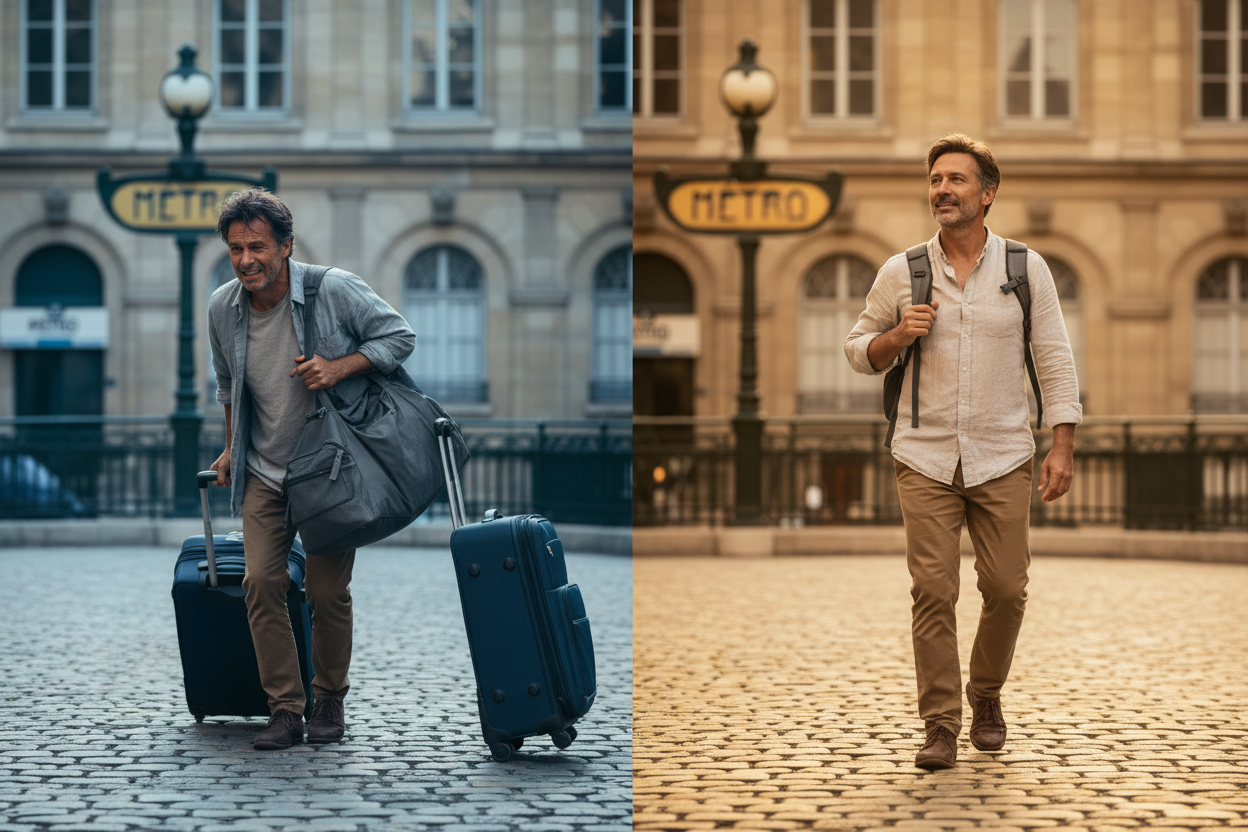
The mobility factor cannot be overstated. Navigating cobblestone streets, climbing subway stairs, or changing accommodations becomes effortless when you’re not dragging multiple bags. Your shoulders might ache slightly after a long day of sightseeing, but that’s nothing compared to wrestling with heavy luggage across unfamiliar terrain.
Choosing the Perfect Carry-On Bag
Your bag selection forms the foundation of successful carry-on travel. Size matters tremendously here – you need maximum capacity while staying within airline restrictions. Most carriers allow bags measuring 22 x 14 x 9 inches, but always verify specific requirements for your airlines.
Hard-shell suitcases offer excellent protection and often provide slightly more packing space due to their rigid structure. However, soft-sided bags can squeeze into tight overhead compartments more easily and typically weigh less when empty. I personally prefer a high-quality soft-sided bag with multiple compartments and compression zippers.
Wheels make a tremendous difference in your travel experience. Four-wheel spinners roll smoothly in any direction, reducing strain on your arms and shoulders. Look for bags with recessed wheels that won’t break off easily, and ensure the handle extends to a comfortable height for your frame.
Internal organization features can make or break your packing efficiency. Seek bags with built-in compression systems, mesh pockets, and dividers. These elements help maximize space while keeping your belongings organized and easily accessible.
Essential Packing Strategies and Techniques
Rolling clothes instead of folding them can increase your packing capacity by up to 30%. This technique works particularly well for t-shirts, pants, and casual wear. For button-down shirts and dresses, try the bundle wrapping method, where you wrap items around a central core to minimize wrinkles.
Packing cubes revolutionize organization and compression. These lightweight organizers help you categorize clothing types while compressing items to save space. I use different colored cubes for various clothing categories – one for tops, another for bottoms, and a third for undergarments and socks.
Every inch of space counts in carry-on packing. Stuff socks inside shoes, roll belts and place them around the perimeter of your bag, and use the space inside toiletry containers for small items like jewelry or medication. Your shoes can also serve as protective cases for fragile items like chargers or electronics.
Weight distribution affects both comfort and bag durability. Place heavier items like shoes and toiletries at the bottom of your bag, closer to the wheels. This positioning prevents your bag from tipping over and makes it easier to maneuver.
Smart Clothing Choices for Carry-On Travel
Versatility should guide every clothing decision. Choose pieces that can be mixed, matched, and layered to create multiple outfits. A quality blazer can dress up casual wear for dinner or business meetings, while also providing warmth during air-conditioned flights.
Fabric selection dramatically impacts both space requirements and comfort. Merino wool naturally resists odors and wrinkles while providing excellent temperature regulation. Synthetic blends often dry quickly and pack compactly. Avoid heavy cottons and bulky materials that consume precious bag space without adding significant value.
The one-week rule works well for most travelers: pack enough clothing for one week, regardless of trip length. You can always do laundry during longer journeys. This approach prevents overpacking while ensuring you have sufficient clothing variety.
Layering systems provide maximum flexibility for varying climates and activities. Instead of packing a heavy coat, bring a lightweight base layer, an insulating middle layer, and a weather-resistant outer shell. These pieces can be combined for warmth or worn separately in milder conditions.
Toiletries and Personal Care Items
The 3-1-1 rule governs liquid restrictions: containers must be 3.4 ounces or smaller, fit in a 1-quart bag, and you’re limited to 1 bag per passenger. Maximize this allowance by choosing multi-purpose products and decanting larger items into travel-sized containers.
Solid alternatives eliminate liquid restrictions entirely. Shampoo bars, soap bars, and solid deodorants don’t count toward your liquid allowance and often last longer than their liquid counterparts. Many solid products also come in eco-friendly packaging, supporting sustainable travel practices.
Hotel amenities can supplement your toiletry kit, but don’t rely on them completely. Most hotels provide basic shampoo and soap, but you might want to bring your own conditioner, face wash, and specialized products. Research your accommodations beforehand to understand what’s provided.
Multipurpose items reduce the number of products you need to pack. A tinted moisturizer with SPF serves as sunscreen, foundation, and moisturizer. Dr. Bronner’s soap can function as body wash, shampoo, laundry detergent, and even toothpaste in emergencies.
Technology and Electronics Management
Consolidating chargers and cables prevents electronic clutter. Universal charging cables that work with multiple devices reduce the number of cords you need to pack. Portable battery packs ensure your devices stay charged during long travel days without requiring multiple wall adapters.
Cloud storage and digital copies minimize physical document needs. Store important documents like passports, insurance papers, and itineraries in secure cloud storage. Download offline maps, entertainment, and translation apps before departure to reduce reliance on internet connectivity.
Consider the necessity of each electronic device. Do you really need both a tablet and a laptop for vacation? Can your smartphone handle most of your photography needs instead of bringing a separate camera? Each eliminated device saves weight and space while reducing security screening hassles.
Protective cases prevent damage without adding excessive bulk. Soft cases for laptops and tablets provide adequate protection while remaining flexible enough to fit into tight spaces. Avoid hard cases unless you’re traveling to particularly rugged destinations.
Maximizing Comfort During Your Journey
In-flight comfort doesn’t require sacrificing packing efficiency. Compression socks, a lightweight travel pillow, and noise-canceling earbuds can dramatically improve your flight experience without consuming significant bag space. These items often fit easily in your personal item or jacket pockets.
Layered dressing for flights provides temperature flexibility. Airplane cabins can fluctuate between uncomfortably cold and surprisingly warm. Wear your heaviest layer on the plane to save bag space, and choose pieces you can easily add or remove as needed.
Your personal item serves as an extension of your carry-on capacity. A small backpack or tote bag can hold items you need during the flight while providing extra storage for souvenirs on the return journey. Pack this bag strategically with items you might need to access during travel.
Comfort items that serve multiple purposes deserve priority. A sarong can function as a blanket, pillow, towel, or even a modest cover-up. A lightweight scarf provides warmth, style, and can double as a pillow or eye mask when needed.
Common Mistakes to Avoid
Overpacking “just in case” items represents the biggest pitfall for new carry-on travelers. That extra pair of shoes “in case it rains” or the backup jacket “in case it gets cold” quickly consume valuable space. Trust that you can purchase necessary items at your destination if truly needed.
Ignoring weight restrictions can lead to unpleasant surprises at the gate. Some airlines strictly enforce weight limits for carry-on bags, particularly international and budget carriers. Invest in a portable luggage scale to avoid last-minute repacking at the airport.
Failing to research destination-specific needs can leave you unprepared. Some countries require specific plug adapters, certain medications might be restricted, or cultural dress codes might necessitate particular clothing items. Spend time researching your destination’s requirements and customs.
Bringing prohibited items wastes space and creates security delays. Familiarize yourself with current TSA regulations and international restrictions. When in doubt, leave questionable items at home rather than risk confiscation at security checkpoints.
Embracing the Minimalist Travel Mindset
Carry-on only travel represents more than a packing strategy – it’s a philosophy that can transform your entire approach to exploration. When you carry less, you worry less, move more freely, and focus more on experiences rather than possessions.
The skills you develop through minimalist packing extend beyond travel. You’ll become more decisive about what you truly need, more creative with limited resources, and more appreciative of quality over quantity. These lessons often influence purchasing decisions and lifestyle choices long after you return home.
Start your carry-on journey gradually if the concept feels overwhelming. Try a weekend trip with just a carry-on, then progress to longer journeys as you build confidence and refine your packing skills. Each successful trip will reinforce the benefits and help you identify areas for improvement.
Remember that perfection isn’t the goal – efficiency and comfort are. You might occasionally wish you had brought an extra sweater or different shoes, but these minor inconveniences pale compared to the freedom and flexibility that carry-on travel provides. Embrace the learning process and celebrate the liberation that comes with traveling light.
Mastering carry-on only travel takes practice, but the rewards are immediate and lasting. You’ll spend less money, waste less time, and experience less stress while gaining the confidence to explore the world with everything you need contained in a single, perfectly packed bag. The art lies not in bringing less, but in bringing exactly what you need – nothing more, nothing less.
Book Now!
Call to action to book now.
Leave a Comment