
Small Group Travel vs Large Tour Buses: Why Intimate Adventures Beat the Crowd
Picture this: you’re standing in front of the Mona Lisa at the Louvre, but instead of quietly contemplating Da Vinci’s masterpiece, you’re surrounded by a sea of matching baseball caps from your 40-person tour group, all trying to snap the same photo while your guide shouts instructions through a crackling microphone. Sound familiar? If you’ve ever been on a large bus tour, you probably know this scenario all too well.
The travel industry has long been dominated by massive tour operations that herd travelers from one destination to another like cattle. But there’s a growing movement toward small group travel that’s revolutionizing how we explore the world. The question isn’t whether you should travel in a group – it’s about finding the right size group that matches your travel style and goals.
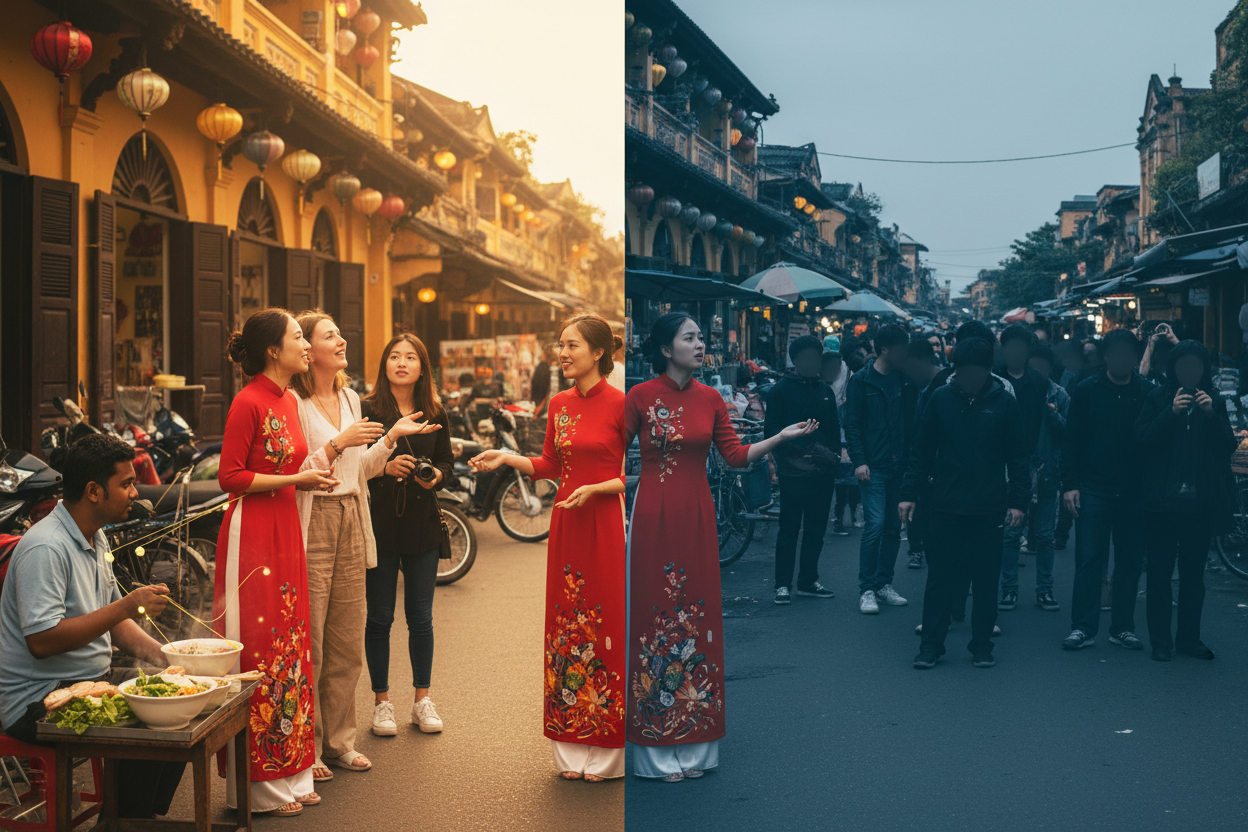
In this comprehensive guide, we’ll explore why small group travel often provides a superior experience compared to large tour buses, examining everything from personal connections to environmental impact. Whether you’re a seasoned traveler or planning your first group adventure, understanding these differences can transform your next vacation from ordinary to extraordinary.
The Personal Touch: Building Meaningful Connections
One of the most significant advantages of small group travel lies in the relationships you’ll form along the way. When you’re traveling with 6-12 people instead of 40-50, every interaction becomes more meaningful and personal. You’re not just another face in the crowd – you’re part of a tight-knit community sharing an adventure.
I remember joining a small group tour through Vietnam where our guide, Linh, learned everyone’s names by the second day and remembered our individual preferences. She knew that Sarah was vegetarian, that Mike was fascinated by architecture, and that I couldn’t resist trying street food. This personal attention simply isn’t possible when guides are managing large groups where remembering names becomes a logistical nightmare.
Small groups also foster genuine friendships among travelers. When you’re sharing meals, experiences, and sometimes even accommodations with the same small group of people, natural bonds form. Many small group travelers report staying in touch with their fellow adventurers long after the trip ends, sometimes even planning future travels together.
Flexibility and Spontaneity: The Freedom to Explore
Large tour buses operate on rigid schedules that leave little room for spontaneity. When you’re managing 40+ people, every stop must be precisely timed, every meal pre-arranged, and every activity scheduled down to the minute. This clockwork precision might seem efficient, but it often strips away the magic of discovery that makes travel so rewarding.
Small groups, on the other hand, can pivot quickly when opportunities arise. Spotted an interesting local festival while driving through a village? A small group can stop and participate. Discovered an amazing family-run restaurant that only seats 12 people? Perfect for your intimate group, impossible for a bus tour. Weather suddenly clears up, revealing stunning mountain views? Your small group can take an impromptu detour that a large bus simply cannot accommodate.
This flexibility extends to individual needs as well. If someone in your small group needs a bathroom break, wants to spend extra time at a particular site, or needs to rest due to health concerns, accommodating these requests doesn’t derail the entire operation. In large groups, individual needs often get overlooked in favor of keeping the masses moving.
Access to Hidden Gems and Authentic Experiences
Some of the world’s most incredible destinations simply cannot accommodate large tour buses. Narrow cobblestone streets in medieval European towns, remote hiking trails leading to secret waterfalls, intimate cooking classes in local homes, and small family-owned businesses often have physical or practical limitations that make large groups impossible.
Small group travel opens doors that remain forever closed to bus tours. You can explore the narrow alleyways of Marrakech’s medina without creating a human traffic jam, visit small-scale organic farms where the owner can actually speak with each visitor, or participate in traditional ceremonies where your presence won’t overwhelm the local community.
Local guides often prefer working with small groups because they can provide more personalized storytelling and answer individual questions. Instead of shouting over crowd noise, guides can share intimate stories, local legends, and personal insights that bring destinations to life in ways that large group presentations simply cannot match.
Environmental Impact: Traveling Responsibly
The environmental benefits of small group travel extend far beyond just transportation emissions. While it’s true that per-person carbon footprints might sometimes be higher for small groups using multiple smaller vehicles instead of one large bus, the overall environmental impact tells a different story when you consider the bigger picture.
Small groups typically stay in locally-owned accommodations rather than large international hotel chains, supporting local economies and reducing the environmental strain of massive resort complexes. They eat at family-run restaurants, shop at local markets, and participate in community-based tourism initiatives that distribute economic benefits more evenly throughout destinations.
Perhaps more importantly, small groups are less likely to overwhelm fragile ecosystems and cultural sites. When 50 people descend on a small village or natural area simultaneously, the impact can be devastating. Small groups can visit these same places with minimal disruption, allowing for sustainable tourism that preserves destinations for future generations.
Quality Over Quantity: Deeper Cultural Immersion
Large tour buses often operate on a “greatest hits” mentality, rushing from one famous landmark to another without time for meaningful cultural interaction. It’s tourism at its most superficial – you see the sights, take the photos, and move on without truly understanding the places you visit.
Small group travel prioritizes depth over breadth. Instead of checking off a dozen tourist attractions in a single day, small groups might spend an entire afternoon with a local artisan learning traditional crafts, participate in a community project, or simply sit in a village square observing daily life unfold naturally.
This approach leads to genuine cultural exchange. Local people are more likely to engage authentically with a small group of respectful travelers than with a large, overwhelming crowd. You’ll have conversations that provide real insights into local customs, challenges, and perspectives – the kind of understanding that transforms tourists into global citizens.
Comfort and Convenience: The Practical Advantages
From a purely practical standpoint, small group travel offers numerous comfort advantages. Boarding and disembarking takes minutes instead of the lengthy process required for large groups. Restaurant meals can be served simultaneously rather than in waves, and bathroom stops don’t require queuing systems.
Accommodation options expand dramatically with small groups. Instead of being limited to large hotels that can handle bus loads of guests, small groups can stay in boutique properties, historic inns, eco-lodges, or even private homes that offer unique character and charm.
Transportation becomes more comfortable and efficient too. Small groups often use comfortable vans or minibuses that can navigate roads inaccessible to large coaches, provide better views for all passengers, and create a more intimate, social atmosphere during travel time.
The Investment Perspective: Value Beyond Price
Small group tours typically cost more per person than large bus tours, and this price difference often stops budget-conscious travelers from considering them. However, when you analyze what you’re actually getting for your money, small group travel often provides superior value.
The higher cost usually reflects better accommodations, more meals included, smaller guide-to-traveler ratios, and access to experiences simply unavailable to large groups. You’re paying for quality over quantity, personalization over standardization, and authentic experiences over tourist traps.
Consider also the intangible benefits: the stress reduction of not fighting crowds, the deeper connections formed, the unique experiences gained, and the authentic cultural insights developed. These elements of travel satisfaction are difficult to quantify but often make the difference between a good trip and a life-changing adventure.
Making the Right Choice for Your Travel Style
Small group travel isn’t necessarily better for everyone in every situation. Large tour buses can be ideal for travelers who prioritize covering maximum ground in minimum time, those who prefer the anonymity of large groups, or budget-conscious travelers who want basic sightseeing at the lowest possible cost.
However, if you value authentic cultural experiences, meaningful connections, flexibility, and the opportunity to explore beyond typical tourist routes, small group travel offers advantages that large bus tours simply cannot match. The investment in a small group experience often pays dividends in memories, relationships, and personal growth that last long after you return home.
Before booking your next group travel experience, honestly assess what you hope to gain from your journey. Are you looking to check famous landmarks off your bucket list as efficiently as possible, or do you want to truly understand and connect with the places you visit? Your answer to this question should guide your choice between small group intimacy and large group logistics.
The future of travel is moving toward more sustainable, authentic, and personalized experiences. Small group travel represents this evolution – a return to the original spirit of exploration where the journey matters as much as the destination, and where travelers become temporary members of a global community rather than passive observers of it.
Leave a Comment