
Italy Beyond Rome: Undiscovered Gems According to a Travel Expert
When most travelers think of Italy, their minds immediately drift to the iconic Colosseum in Rome, the romantic canals of Venice, or the Renaissance masterpieces of Florence. While these destinations are undeniably magnificent, Italy’s true magic often lies in its hidden corners—places where authentic Italian culture thrives away from the tourist crowds. As someone who has spent over a decade exploring every nook and cranny of the Italian peninsula, I’m excited to share some of the country’s most enchanting undiscovered gems that will transform your understanding of what Italy truly offers.
These lesser-known destinations provide an intimate glimpse into real Italian life, where locals still gather in neighborhood piazzas for their evening passeggiata, where family-run trattorias serve recipes passed down through generations, and where ancient traditions continue to flourish in their original settings. Let me take you on a journey through Italy’s best-kept secrets.
The Enchanting Sassi of Matera: A Journey Through Time
Tucked away in the southern region of Basilicata, Matera stands as one of the world’s most extraordinary cities. The ancient cave dwellings known as the Sassi represent one of the longest continuously inhabited settlements on Earth, dating back over 9,000 years. Walking through these stone neighborhoods feels like stepping directly into a biblical scene—which is exactly why Mel Gibson chose Matera as the filming location for “The Passion of the Christ.”
What makes Matera particularly special is how the city has transformed itself. Once considered a symbol of poverty and shame, the Sassi have been lovingly restored and converted into boutique hotels, restaurants, and artisan workshops. You can now sleep in a cave hotel that was once home to families and their livestock, dining by candlelight in restaurants carved directly into the rock face.
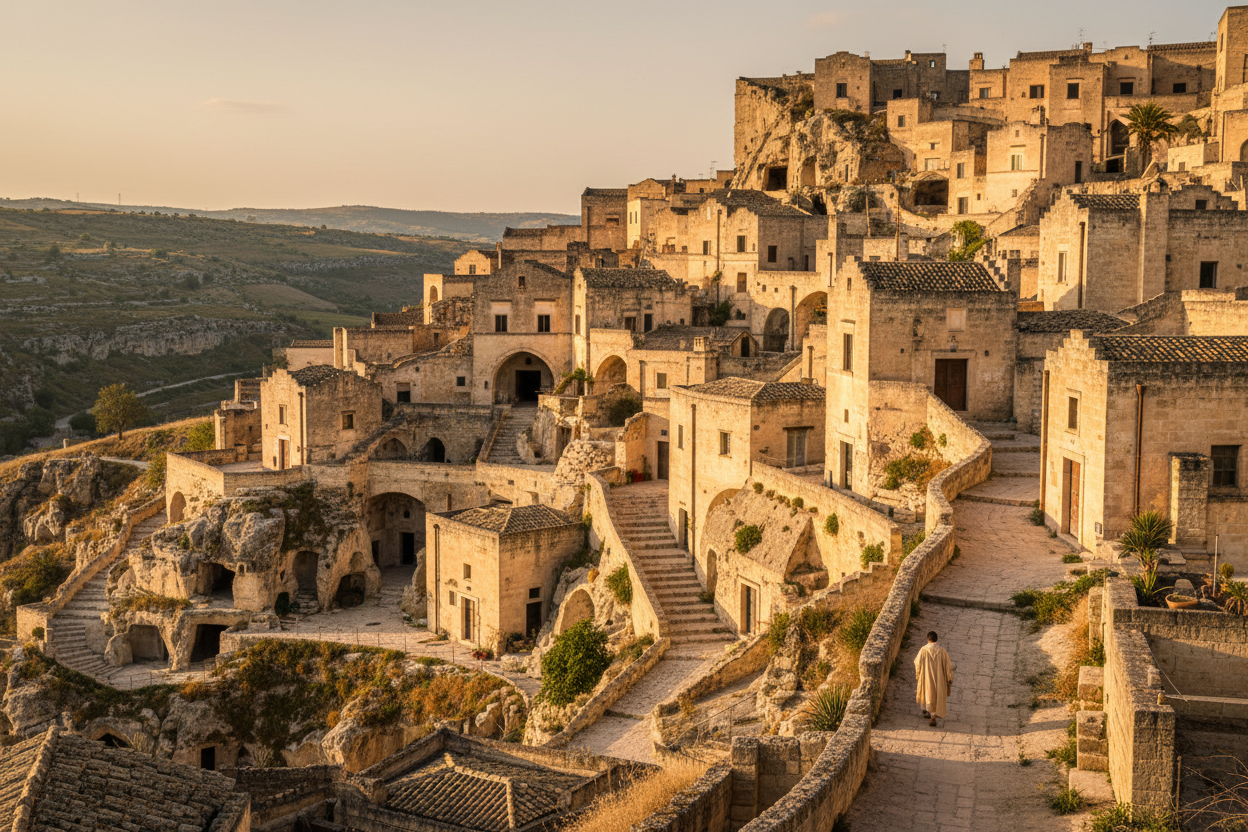
The best time to visit Matera is during the early morning or late afternoon when the golden limestone glows in the Mediterranean sun. Don’t miss the rock churches scattered throughout the ravines, where Byzantine frescoes still adorn the walls after centuries of weathering.
Alberobello: Where Fairy Tales Come to Life
In the heel of Italy’s boot, the small town of Alberobello looks like something straight out of a Brothers Grimm fairy tale. The town is famous for its trulli—distinctive cone-shaped houses with whitewashed walls and gray stone roofs. These architectural marvels, built without mortar using an ancient dry-stone technique, have earned Alberobello a spot on the UNESCO World Heritage List.
The trulli weren’t just built for their charm; they served a practical purpose. Legend has it that these structures could be quickly dismantled when tax collectors came around, as taxes were levied on permanent structures. Today, many trulli have been converted into cozy bed and breakfasts, shops selling local products, and restaurants serving Puglian specialties.
While exploring Alberobello, make sure to visit the Trullo Sovrano, the only two-story trullo in town, which now serves as a museum. The symbols painted on many rooftops tell stories of the families who once lived there—each one a small piece of local history preserved in stone and paint.
The Dramatic Beauty of the Dolomites
While the Alps get most of the attention, the Dolomites in northeastern Italy offer some of the most breathtaking mountain scenery in Europe. These jagged peaks, carved from ancient coral reefs, turn pink and orange during sunrise and sunset in a phenomenon locals call “alpenglow.”
The Dolomites region perfectly blends Italian warmth with Austrian efficiency, reflecting the area’s complex history. Here, you’ll hear German, Italian, and Ladin spoken on the streets, and the cuisine reflects this cultural melting pot with dishes like speck and canederli alongside traditional Italian pasta.
Val di Funes offers some of the most photographed landscapes in the Dolomites, where medieval churches sit against backdrops of towering peaks. The area is a paradise for hikers, with well-marked trails connecting mountain huts where you can enjoy hearty meals and local wines. Even if you’re not an avid hiker, the cable cars provide easy access to spectacular viewpoints that will leave you speechless.
Procida: The Colorful Island Time Forgot
While Capri and Ischia attract the masses, tiny Procida remains refreshingly authentic. This small volcanic island in the Bay of Naples is a kaleidoscope of pastel-colored houses tumbling down to small harbors filled with traditional fishing boats. The island served as the filming location for “Il Postino,” and walking through its narrow streets, you’ll understand why directors fall in love with its cinematic beauty.
Procida’s charm lies in its simplicity. There are no luxury resorts or designer boutiques here—just family-run restaurants serving the day’s catch, small beaches where locals still gather to play cards, and a pace of life that moves to the rhythm of the tides. The island’s lemons are legendary, and you’ll find them featured in everything from limoncello to fresh seafood dishes.
Marina Corricella, the island’s ancient fishing village, is particularly enchanting in the early evening when the fishing boats return and the harbor comes alive with activity. The colorful houses weren’t painted for tourists—each family traditionally painted their home in bright colors so fishermen could identify their houses from the sea.
Orvieto: A Hilltop Masterpiece
Perched dramatically on a volcanic cliff in Umbria, Orvieto offers one of Italy’s most spectacular settings. This medieval city rises from the countryside like a mirage, its honey-colored buildings seeming to grow directly from the rock itself. The town’s Gothic cathedral, with its glittering mosaic facade, ranks among Italy’s most beautiful churches.
Beneath Orvieto lies an equally fascinating world. The city sits atop a honeycomb of caves, tunnels, and chambers carved into the soft volcanic rock over more than 2,500 years. These underground spaces served various purposes throughout history—from Etruscan tombs to medieval wine cellars to World War II bomb shelters. Guided tours of Orvieto Underground reveal this hidden city beneath the city.
The surrounding countryside produces some of Umbria’s finest wines, particularly the crisp white Orvieto Classico. Many local wineries offer tastings in caves carved directly into the hillside, where the constant temperature creates perfect conditions for aging wine. The combination of history, architecture, and gastronomy makes Orvieto a perfect day trip that feels worlds away from tourist-heavy destinations.
The Cinque Terre’s Quieter Cousin: Tellaro
While the Cinque Terre struggles with overtourism, the tiny fishing village of Tellaro offers similar coastal beauty without the crowds. This picturesque village clings to rocky cliffs overlooking the Gulf of Poets, where Lord Byron once swam and Percy Shelley found inspiration for his poetry.
Tellaro consists of just a few narrow streets lined with colorful houses that seem to defy gravity as they perch on the cliff edge. The village has no beach to speak of—just a small harbor where locals moor their boats and brave souls dive directly into the crystal-clear Ligurian Sea. The Church of San Giorgio, built right at the water’s edge, appears to float on the waves during high tide.
The village comes alive during the summer evening passeggiata, when locals emerge from their homes to socialize in the small piazza. The single restaurant, Il Borgo, serves exceptional seafood caught by local fishermen, often featuring the day’s catch in simple preparations that highlight the quality of the ingredients.
Planning Your Off-the-Beaten-Path Italian Adventure
Exploring Italy’s hidden gems requires a different approach than visiting major tourist destinations. These smaller towns and villages often have limited accommodation options, so booking in advance is essential, especially during peak season. Many of the best experiences—like staying in a trullo or cave hotel—should be reserved well ahead of your trip.
Transportation to these destinations often involves a combination of trains, buses, and sometimes rental cars. While this might seem daunting, the journey itself becomes part of the adventure. Regional trains in Italy offer beautiful views of the countryside, and local buses provide opportunities to interact with residents going about their daily lives.
The best time to visit most of these destinations is during the shoulder seasons—late spring or early fall—when the weather is pleasant, crowds are thinner, and local life continues at its natural pace. Summer can be quite hot in southern destinations like Matera and Alberobello, while the Dolomites are perfect for hiking during the warmer months.
Conclusion: Discovering the Real Italy
Italy’s undiscovered gems offer something that famous destinations simply cannot: authenticity. In these places, you’re not just observing Italian culture—you’re experiencing it as locals do. You’ll share meals with families who have lived in the same village for generations, explore ancient streets without fighting through crowds for the perfect photo, and discover that Italy’s greatest treasures aren’t always found in guidebooks.
These hidden destinations remind us why we fell in love with the idea of Italy in the first place. They offer the romance of discovery, the joy of unexpected encounters, and the satisfaction of finding something truly special that few others have experienced. As mass tourism continues to overwhelm popular destinations, these quieter corners of Italy become increasingly precious.
Your Italian adventure doesn’t have to end with checking famous landmarks off a list. The real magic happens when you wander down an unmarked street in Tellaro, watch the sunrise paint the Dolomites pink, or share a bottle of wine with new friends in a Matera cave restaurant. These are the moments that transform a trip into a lifelong love affair with Italy—and they’re waiting for you just beyond the well-worn tourist trail.
Leave a Comment